
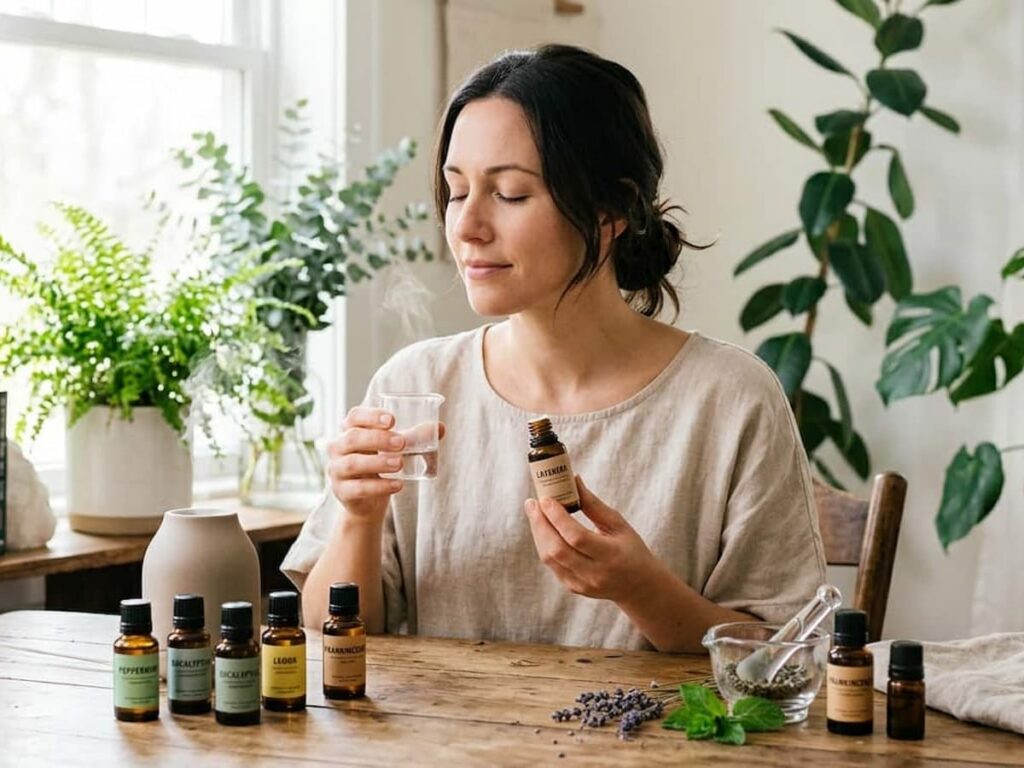
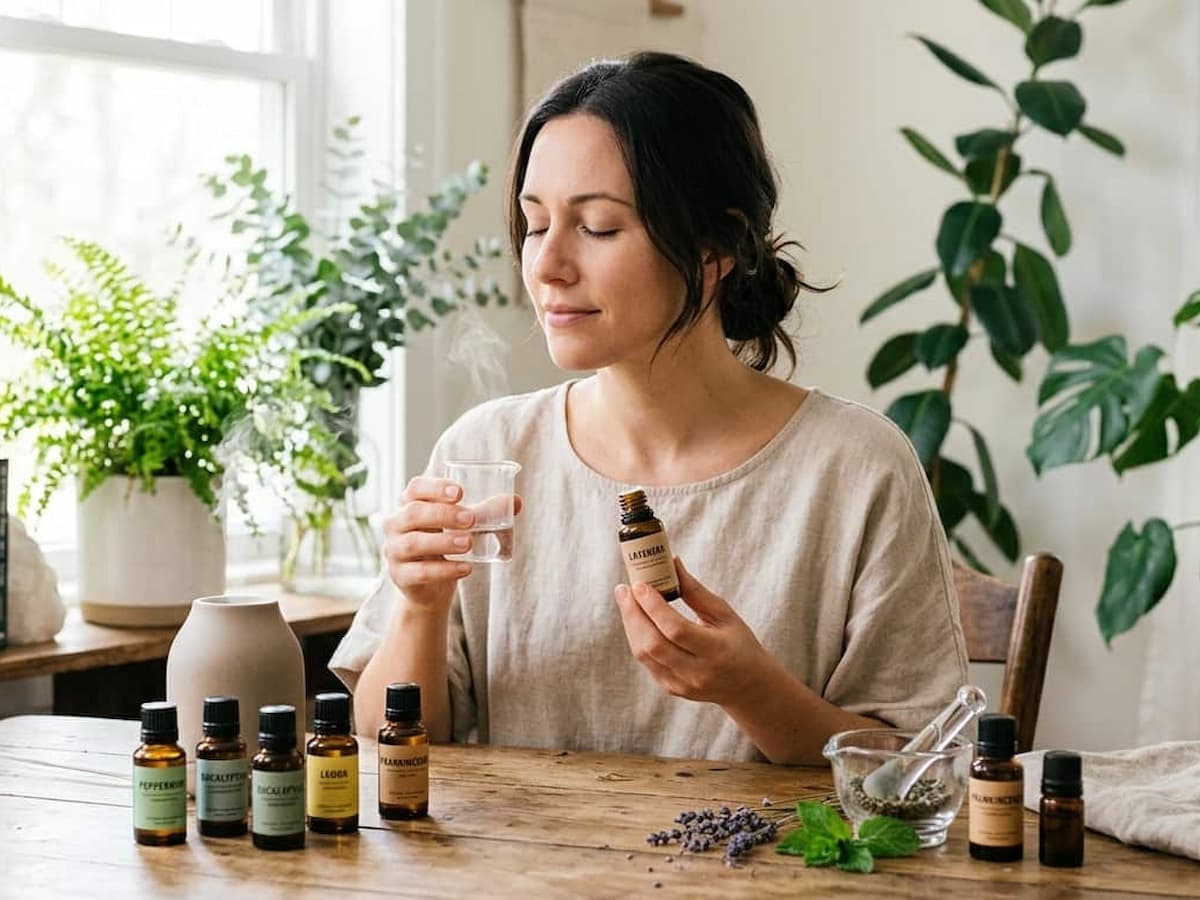

Have you ever walked into a friend's house and felt instantly enveloped by a cloud of lavender or eucalyptus? It seems like everyone has a sleek little diffuser puffing away on their counter these days. The global market for these tiny bottles of plant extracts has exploded, reaching billions of dollars as people look for natural ways to handle stress and sleep.¹
But let's be honest. When you see claims that a few drops of oil can cure your anxiety or solve your chronic health issues, it is easy to get skeptical. Have you been there, staring at a twenty-dollar bottle of oil, wondering if it is actually doing anything to your body, or if it is just a fancy way to make your living room smell nice?
We are going to skip the marketing fluff and look at what the actual science says. It turns out that while needed oils are not miracle cures, they are also far from useless. By separating the hype from the clinical facts, you can learn how to use these aromatic tools to actually support your daily wellness.
The Science of Scent: How Aromatherapy Works
To understand how needed oils work, we have to look at your brain. Aromatherapy is not some mystical energy force. It is basic biology.
When you take a deep sniff of peppermint or orange oil, tiny volatile molecules travel up your nose and hit your olfactory receptors. These receptors act like a direct hotline, sending immediate electrical signals straight to your limbic system.²
This part of your brain houses your amygdala, which handles emotions, and your hippocampus, which manages memory. It is a biological superhighway. Because this pathway bypasses the logical, thinking parts of your brain, scent can alter your heart rate, blood pressure, and stress levels almost instantly. Think of it like a physical shortcut to your emotional control center.
So yes, inhaling a scent can physically change how your body reacts to stress. But let's keep our feet on the ground. Just because a scent can calm your nervous system does not mean it can cure a chronic disease or kill a virus inside your body. It is a sensory support tool, not a medical intervention.
What the Research Findings Say
For a long time, scientists dismissed essential oils as placebo-driven wellness trends. But recent clinical trials from the last couple of years have turned up some eye-opening results.
Take sleep and anxiety, like. A major review of clinical trials published in late 2025 showed that inhaling lavender oil for just five minutes significantly reduced pain and anxiety for patients undergoing stressful needle procedures. Another review from late 2024 found that older adults suffering from sleep disorders saw major improvements in their sleep quality and a reduction in anxiety when using aromatherapy.
Then there is the brain power connection. A fascinating study from the UC Irvine Center for the Neurobiology of Learning and Memory followed older adults who had needed oils diffused in their bedrooms for two hours every night.³ After six months, the aromatherapy group showed a massive 226% improvement in cognitive and memory performance compared to the control group.³ Brain scans even showed physical improvements in their memory pathways.
But we also have to talk about the limitations of this research. Many studies on needed oils are still quite small, and it is incredibly hard to run a perfect double-blind study. After all, how do you give someone a placebo scent when their nose instantly tells them they are smelling lavender? Although the anecdotal evidence is vast, clinical validation is still catching up.
Safety First: Navigating Risks and Quality
Just because something comes from a plant does not mean it is completely safe. Poison ivy is natural, too.
First, let's clear up a massive rumor that has scared parents for years. You might have heard that lavender and tea tree oils act as endocrine disruptors that can cause abnormal breast development in young boys. A major study conclusively ruled this out, proving that normal use of these oils in personal care products carries absolutely no hormonal risk for kids.
But real safety risks do exist, and you need to know them.
• Skin irritation: Applying undiluted oils directly to your skin is a recipe for contact dermatitis. Always mix them with a carrier oil like jojoba or sweet almond oil first.
• Ingestion danger: Never swallow needed oils. They are incredibly concentrated (one drop of peppermint oil has the botanical punch of 26 cups of herbal tea) and can cause serious liver strain or throat irritation.
• Lung irritation: The American Lung Association has warned that diffusing oils in small, poorly ventilated rooms can release volatile compounds that trigger asthma attacks.
• Toxicity to kids and pets: Certain oils, like wintergreen, contain compounds that are highly toxic if swallowed. The U.S. Consumer Product Safety Commission even issued urgent recalls in late 2025 for wintergreen oils that lacked child-resistant packaging.
Because the FDA does not regulate needed oils as drugs, you also have to watch out for low-quality products. Many cheap bottles labeled “100% pure” are actually cut with synthetic fragrances. Look for reputable brands that list the botanical name of the plant and perform third-party testing.
Top Recommended Essential Oils
If you want to start using these botanical tools in your daily routine, you need to know which ones actually have science on their side. Here is a breakdown of the most reliable options.
• Lavender: Best for calming anxiety, improving sleep, and soothing tension.
• Peppermint: Great for easing tension headaches when diluted and applied to your temples.
• Rosemary or Sage: Perfect for boosting your focus and memory during work or study sessions.
Integrating Oils into a Balanced Wellness Plan
So how do you actually use this information without getting swept up in the hype? The key is to view needed oils as a helpful sidekick, not the hero of your healthcare story.
You can use them to build simple, comforting rituals. Maybe you diffuse sweet orange in the morning to help you wake up, or keep a diluted rollerball of lavender in your bag for stressful workdays. These small sensory cues tell your brain it is time to focus or time to wind down.
But if you are dealing with chronic insomnia, severe anxiety, or clinical depression, a bottle of oil is not going to solve the problem. That is when you need to skip the diffuser and talk to a healthcare professional. Use oils to support your wellness, not to replace real medical care.
The Smart Way to Use Needed Oils
At the end of the day, needed oils are not magic potions, but they are not snake oil either. They are powerful botanical tools that, when used safely, can give your mental and physical wellness a genuine boost.
By staying informed and keeping a healthy dose of skepticism, you can enjoy the very real benefits of aromatherapy without falling for the wild marketing claims. Grab a bottle of high-quality lavender, mix it with a carrier oil, and let your nervous system take a well-deserved break.
Sources:
1. Yahoo Finance Aromatherapy Market Report
https://uk.finance.yahoo.com/news/2025-aromatherapy-needed-oils-market-094900042.html
2. Mayo Clinic Aromatherapy Guide
https://crm-prod-healing.akamai.mayo.edu/wp-content/uploads/2021/06/aromatherapy-1.pdf
3. UC Irvine Sweet Smell of Success Study
Sweet smell of success: Simple fragrance method produces major memory boost
*This article on ourhealthdepot.com is for informational and educational purposes only. Readers are encouraged to consult qualified professionals and verify details with official sources before making decisions. This content does not constitute professional advice.*