Hidden Sources of Added Sugar in Everyday Foods
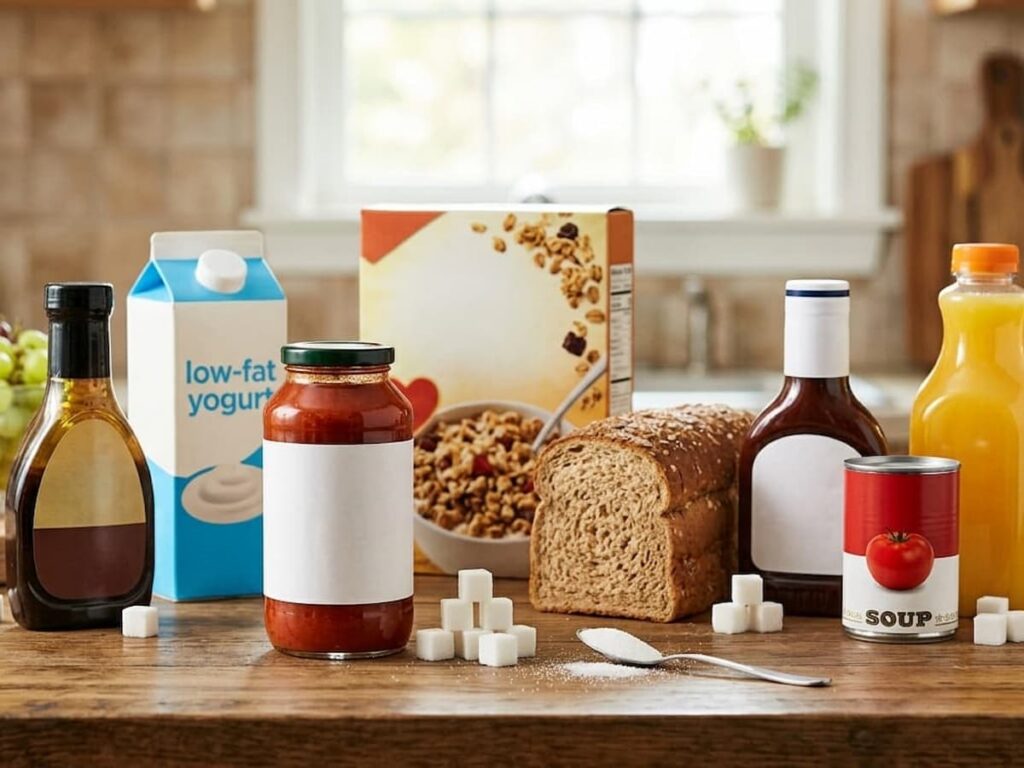

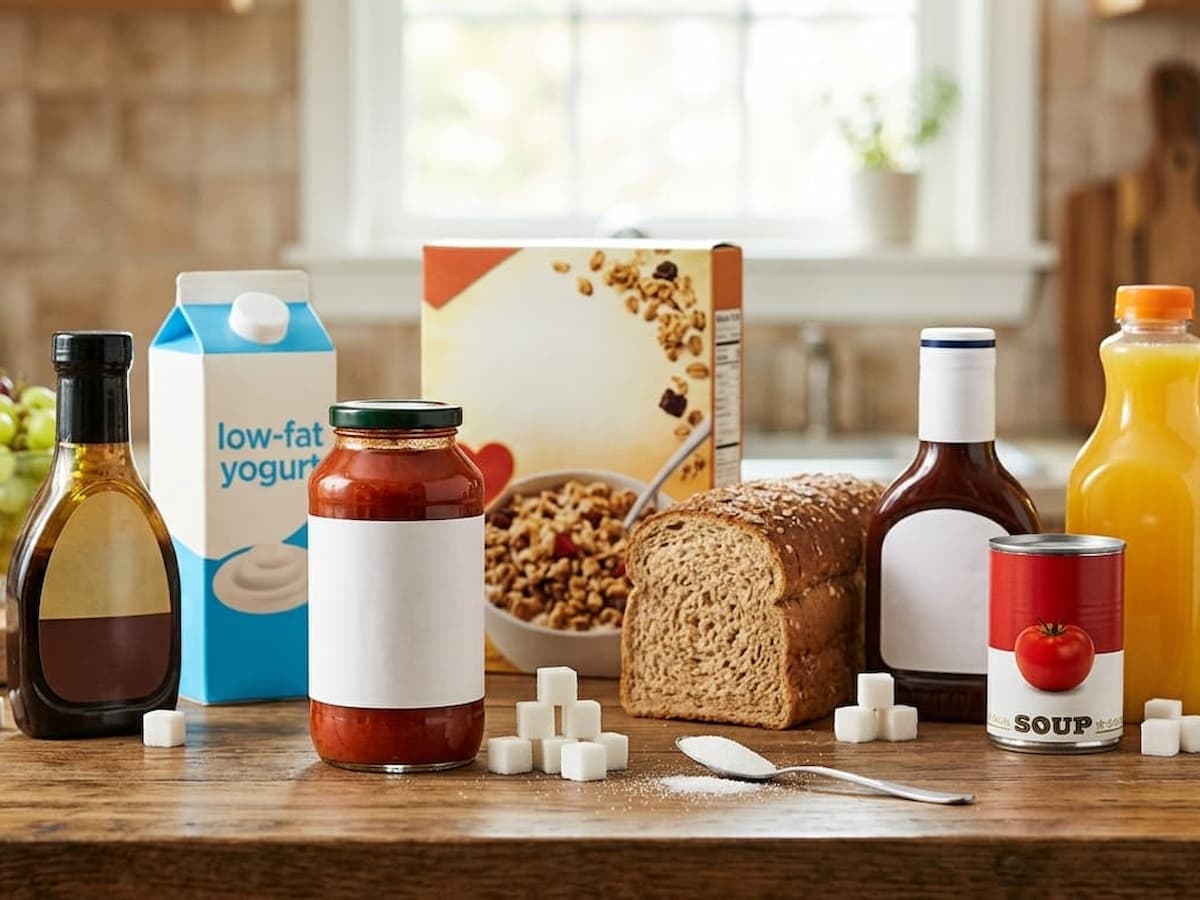
Have you ever looked at your grocery cart and felt proud of your choices? You bought pasta sauce, whole-wheat bread, yogurt, and some dried fruit. It looks like a picture of health. But there is a silent passenger riding along in almost every single one of those items.
Added sugar is everywhere in our modern food supply. We are not just talking about the obvious culprits like cookies, sodas, and candy bars. We are talking about savory foods that do not even taste sweet.
Why do food manufacturers do this? It is not just about making things taste better, though that is a big part of it. Sugar is a cheap, highly effective preservative. It extends shelf life, improves the texture of bread, and balances out the harsh acidity in things like canned tomatoes.
The average American now consumes between 17 and 22 teaspoons of added sugar every single day.¹ That is roughly 68 to 88 grams, which is a massive amount. To put that in perspective, the American Heart Association recommends a daily limit of just 6 teaspoons (25 grams) for women and 9 teaspoons (36 grams) for men.
So how do you take back control? It starts with becoming a smarter, more confident shopper who knows exactly what to look for.
Reading Between the Lines: Decoding Food Labels
Walking down the grocery store aisle can feel like navigating a minefield of marketing claims. Packages scream “low-fat,” “organic,” or “natural” to get your attention. But if you want the real story, you have to flip the package over.
Fortunately, finding hidden sugar is easier than it used to be. The FDA mandates a dedicated line on the Nutrition Facts panel that reads “Includes [X]g Added Sugars.”² This is your best friend. It separates the naturally occurring sugars, like the lactose in plain milk or fructose in fruit, from the extra sugar the manufacturer dumped in during processing.
If you want to know exactly what you are eating, you need to read the ingredient list. The catch is that sugar rarely goes by its real name. It hides behind more than 60 different aliases.
Here are some of the most common sugar code words to watch out for:
• The Syrups: Corn syrup, high-fructose corn syrup, brown rice syrup, and malt syrup.
• The Ose Family: Dextrose, fructose, glucose, lactose, maltose, and sucrose.
• Nectars and Concentrates: Agave nectar, fruit juice concentrate, cane juice, and molasses.
Keep in mind that ingredients are listed on the label by weight, from highest to lowest. If any of these sneaky aliases appear in the first three or four ingredients, you are looking at a product that is heavily sweetened.
The Usual Suspects: Processed Foods That Are Sweeter Than You Think
We expect sugar in a slice of cake, but what about your dinner? Many of the most aggressive sugar bombs in the grocery store are actually savory foods.
Take store-bought marinara sauce, like. Manufacturers routinely dump sugar into the pot to tone down the natural acidity of the tomatoes. A simple half-cup serving of commercial pasta sauce can easily pack 4 to 5 grams of added sugar.
Condiments are another massive trap. Ketchup and sweet relish contain about 4 to 5 grams of sugar in a single tablespoon. If you are dousing your burger in barbecue sauce, you are pouring liquid sugar over your meal. Even a side of coleslaw at a restaurant can contain up to 15 grams of sugar, turning a vegetable side dish into a dessert.
These hidden sugars cause rapid spikes in your blood sugar. When you eat processed foods loaded with simple sugars, your body absorbs them quickly, leading to a sudden surge of energy followed by an inevitable, exhausting crash.
This is especially frustrating when you buy products marketed as healthy. Many whole-wheat breads contain added sugar to feed the yeast and keep the loaf soft on the shelf. Dried cranberries, which seem like a great snack, are naturally so tart that manufacturers load them with added sugar to make them palatable.
The Breakfast Trap: Starting Your Day on a Sugar High
Breakfast is often called the most important meal of the day, but it is also the easiest place to accidentally consume a day's worth of sugar before 9:00 AM. Have you been there? You grab a quick yogurt and a cereal bar, thinking you are doing your body a favor, only to find yourself starving and tired an hour later.
Think you are making a healthy choice with yogurt? A single 2/3-cup serving of commercial vanilla yogurt can contain up to 17 grams of added sugar. That is nearly your entire daily recommended limit in a tiny plastic cup.
Granola and flavored instant oatmeal packets are not much better. They are often held together by sticky syrups and sweetened dried fruits. Even “healthy” adult cereals are major culprits. Classic Raisin Bran packs about 9 grams of added sugar per cup, while Bran Flakes contain around 6 grams.
Starting your morning with this much sugar sets off a vicious cycle. Your blood sugar spikes, insulin rushes in to clear it, and your energy levels plummet by mid-morning. You end up feeling tired, irritable, and craving more quick carbohydrates to get that energy back.
You can easily break this cycle with a few simple swaps.
• Plain Yogurt with Fresh Fruit: Buy unsweetened plain yogurt and add your own fresh berries or a dash of cinnamon.
• Unsweetened Rolled Oats: Cook plain oats and stir in a spoonful of nut butter and sliced banana for natural sweetness.
• Savory Breakfasts: Shift toward eggs, avocado, and vegetables to keep your blood sugar completely stable.
The Regulatory Battle Over Your Food Labels
The good news is that regulators are finally fighting back against these hidden sugars. We have seen some major shifts recently that make it much harder for food companies to hide what they are putting in their products.
For starters, the FDA recently overhauled the rules for using the word “healthy” on food packaging.³ Under guidelines that began rolling out in 2025, a food product must meet strict, science-based limits on added sugars, sodium, and saturated fat to use that claim. This means highly sweetened breakfast cereals, fortified white breads, and sugary fruit snacks are no longer allowed to trick you with a “healthy” label.
There is also a massive push for mandatory front-of-package labeling. The FDA proposed a new system where packages must display clear, at-a-glance markers for saturated fat, sodium, and added sugars right on the front. Public health groups like the American Dental Association strongly endorsed this move, pointing out that there is simply no safe threshold of sugar intake for tooth decay.
Even school cafeterias are seeing changes. New federal standards implemented for the 2025-2026 school year placed strict caps on added sugars in school breakfasts and lunches. Breakfast cereals are now capped at 6 grams of added sugar per dry ounce, and yogurts cannot exceed 12 grams per 6 ounces. Although the sugar industry has pushed back, claiming these labels are confusing, these updates are a massive win for public health literacy.
By choosing whole, minimally processed foods, you naturally bypass the chemical tricks and hidden sweeteners that manufacturers rely on.
Simple Ways to Reclaim Your Palate
Cutting back on added sugar does not mean you have to sentence yourself to a life of bland, tasteless meals. In fact, it is quite the opposite. When you reduce your sugar intake, your taste buds actually become more sensitive, and real food starts to taste incredibly sweet.
Do not try to go cold turkey overnight. That approach usually leads to intense cravings and frustration. Instead, focus on gradual reductions. If you love sweet coffee, try cutting your usual sugar or syrup portion in half for a week, then reduce it again the following week.
You can also use natural flavor improvers to trick your brain into tasting sweetness. Cinnamon, vanilla extract, and nutmeg are fantastic tools for oatmeal, coffee, and baked goods. They provide a warm, rich flavor profile without adding a single gram of sugar.
At the end of the day, you do not need to be perfect. You just need to be informed. By reading labels, recognizing sugar's sneaky aliases, and choosing whole foods when possible, you can confidently handle the grocery store and take complete control of what goes into your body.
Sources:
1. Added Sugar: Where Is It Hiding?
https://www.health.harvard.edu/staying-healthy/added-sugar-where-is-it-hiding
2. Added Sugars on the Nutrition Facts Label
https://www.fda.gov/food/nutrition-facts-label/added-sugars-nutrition-facts-label
3. FDA Updates Healthy Claim: Providing Refreshed Tool for Consumers
https://www.fda.gov/news-events/press-announcements/fda-updates-healthy-claim-providing-refreshed-tool-consumers
*This article on ourhealthdepot.com is for informational and educational purposes only. Readers are encouraged to consult qualified professionals and verify details with official sources before making decisions. This content does not constitute professional advice.*